Atrium Landscaping....
Moderator: Izhar
-
Munir
- Donor

- Posts: 1086
- Joined: October 23rd, 2012, 1:43 pm
- Country: Pakistan
- City: Islamabad
- Gardening Interests: Ornamental Plants,Vines,Annuals,Herbs,Veggies & Fruit Trees.
New Love: Roses & Lilies - Location: Islamabad
Re: Atrium Landscaping....
Great job done. It will be nice if you could list the plants you used.
-
KBW
- Donor
- Posts: 773
- Joined: February 20th, 2013, 2:07 pm
- Country: Pakistan
- City: Islamabad
- Gardening Interests: Roses, Plants in natural habitat, native plants, landscaping
- Location: Zone 2
Re: Atrium Landscaping....
Sharing a few pics of the atrium described in above post....
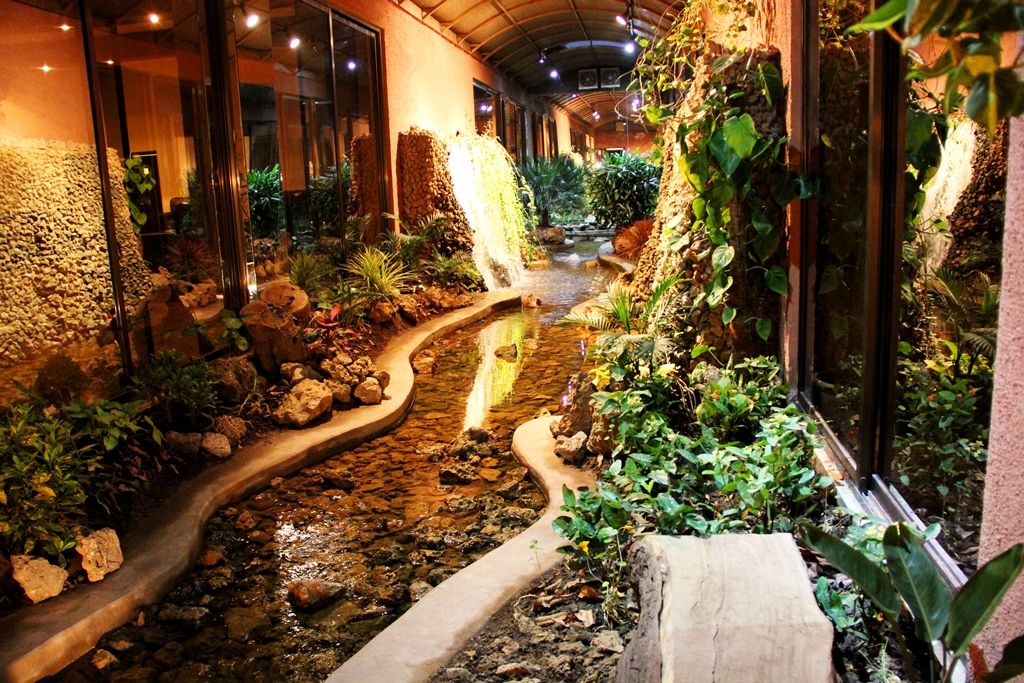
The atrium as seen at night. An effort has been made that the area should not be over lit and spot lights should just provide enough light to illuminate the intended plants, not all the plants. The plants used are very common ferns (only one expensive fern), cheap palms, syngoniums, dracaenas, Ixoras and few crotons. Some of the plants from the house were also used, mostly palms / Philodendron. Most plants are of small size (big plants are expensive) and it will take 2-3 months for this atrium to give a lush green look. I will eagerly wait to see that....
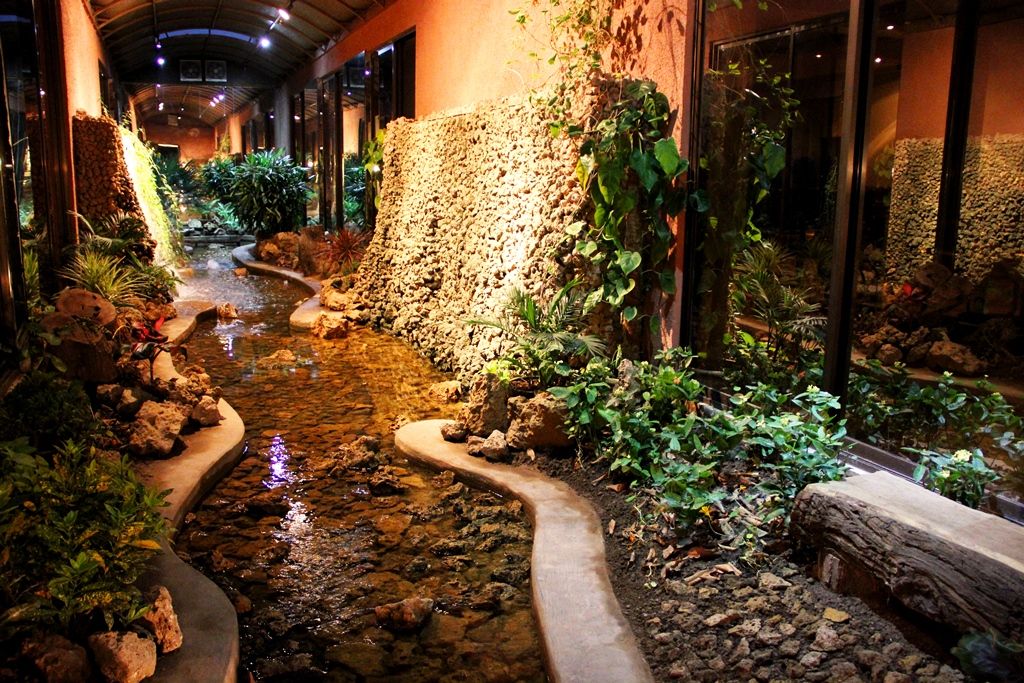
Another angle. Please note the effect created through reflection of the plants as well as the waterfall on the other side through the mirror. This is what I meant by multiplying the effect. And look at the majestic looking Rhapis palm in the back ground.
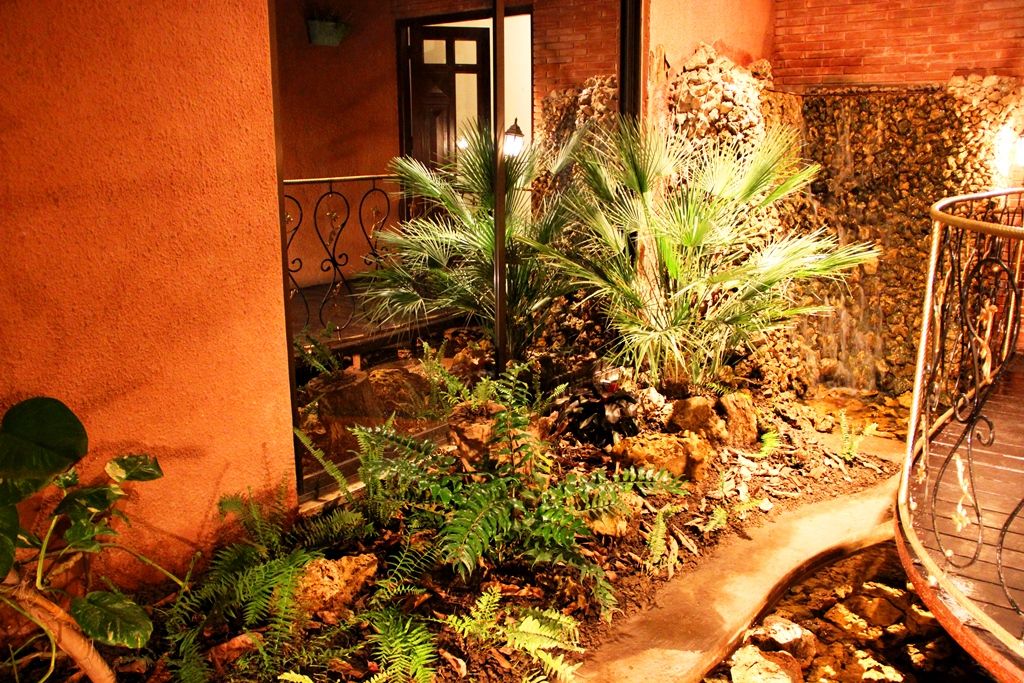
The other corner. Being close to water fall, it is basically a fernery. The lone Chamaerops humilis is the specimen plant in this area. It has been kept in the pot otherwise it will keep growing bigger and make a big size clump. Also the soil in this area will be watered well due to ferns which is not needed for Chemaerops. It is watered after 7-15 days. Look at the reflection...
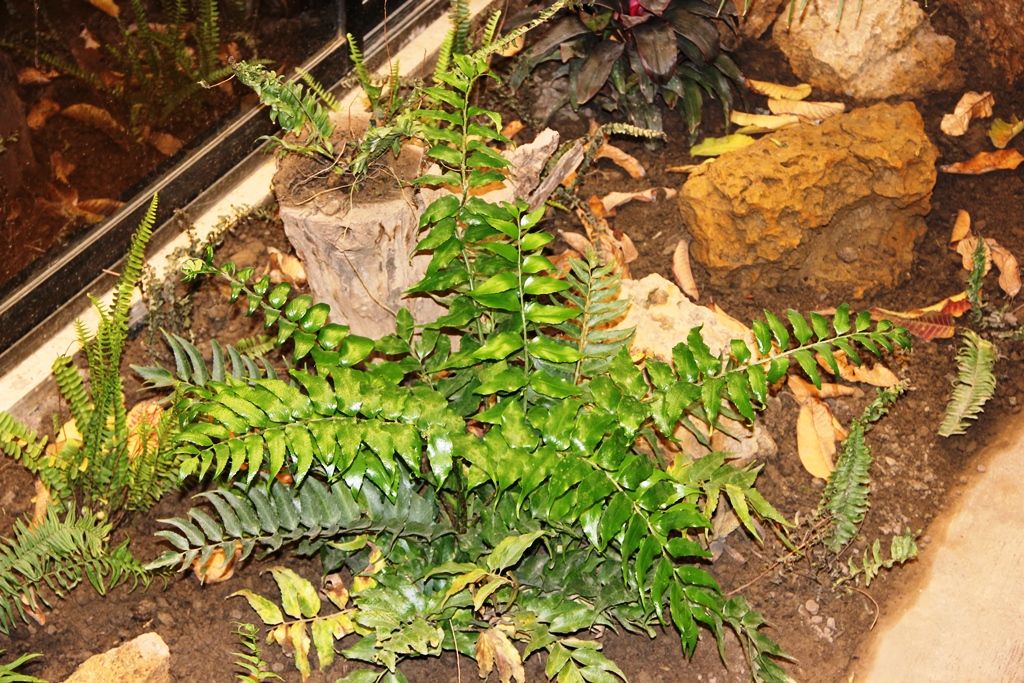
The only expensive fern used is in the centre. Rest all are the cheapest available Blechnum and Nephrolepis ferns of few types. A Nephrolepis exaltata (Boston Fern) has been planted in the wooden log. In time, it's frond will hang down and give a fascinating look. Variegated Nephrolepis have been planted near water and after a while, their leaves will be falling in water. The errect nephrolepis have been planted in the rare. In due time, the will form a stunning back ground and with their runners running through the moist soil, will multiply in great numbers, filling the complete area with lush green ferns.
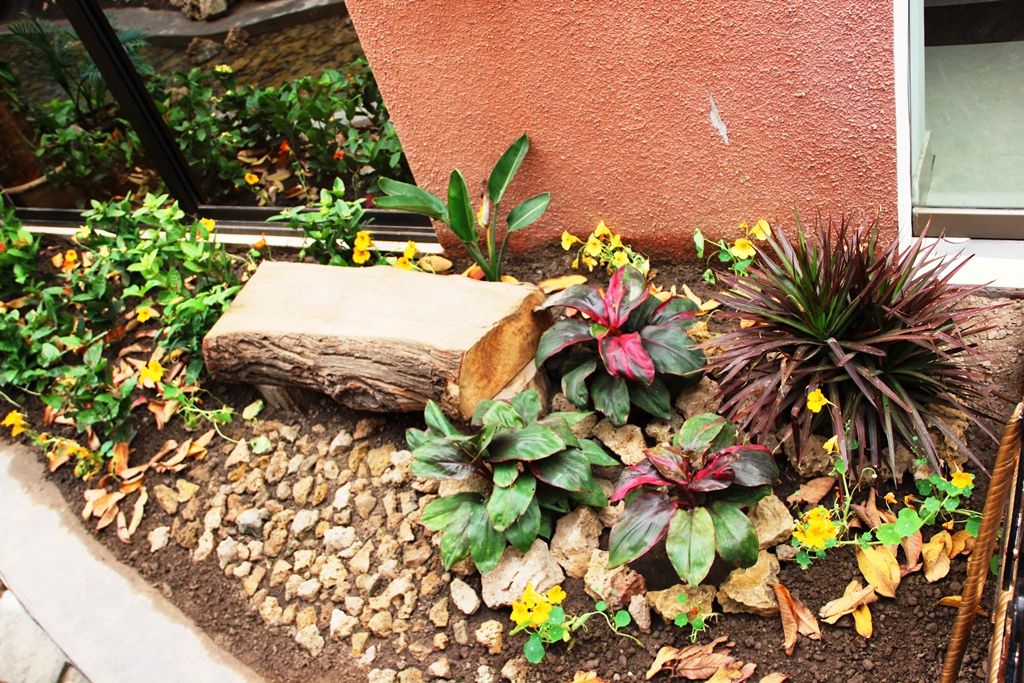
A spare wooden log was used to make a bench and placed in the atrium. Few Dracaena Maharaja with a Sterlitzia in the back ground (hope it flowers).The area between the log and the water fall has been mainly covered with dwarf ixoras which will provide colour most of the year. Nasturtiums have been planted in abundance to fill the gaps. The steps infront of the wooden bench are natural rocks. Previously, the landscaper had covered all soil with white chips and thought that it looked great. It was the first thing I threw out. I wanted the rockery to look natural.
Fallen leaves from the backyard have been collected and used as mulch. The orange colour of guava leaves has enhanced the looks plus in the long run, they will recycle and improve soil texture. Mali has been strictly instructed not to remove the dead / fallen leaves from the atrium. Nothing goes out and everything will be recycled, unless there are fungus infected leaves / branches. Minimum of chemical fertilizers will be used in this plantation.
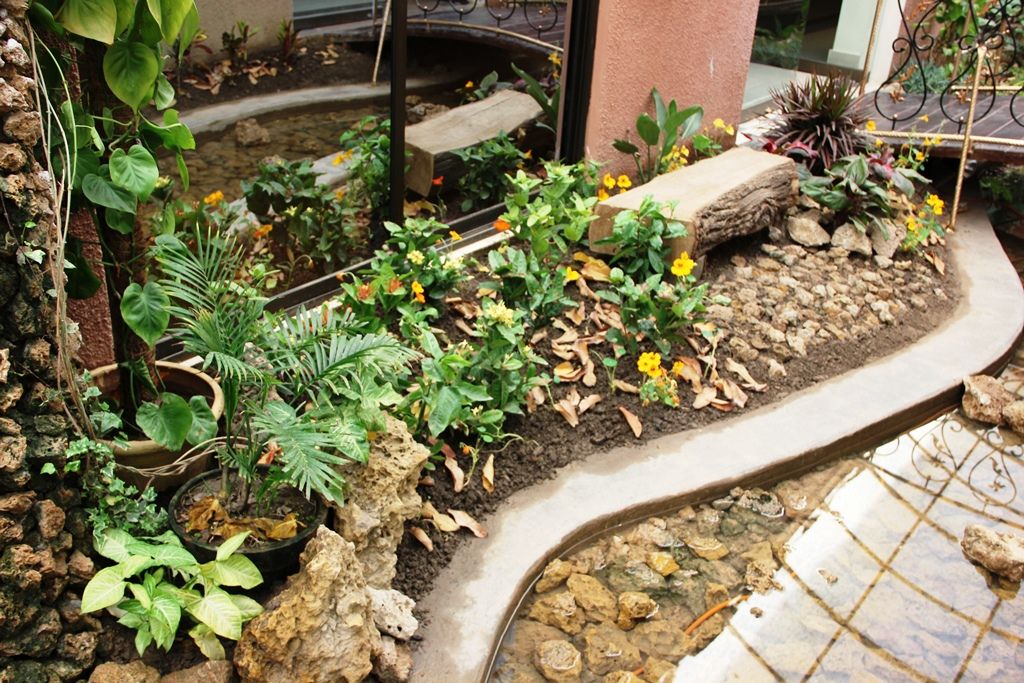
Same area from a different angle. Near the water fall where the area is likely to stay damp, philodendron and chamaedorea cataractarum (cat palm) with syngoniums planted in the ground. In time, syngoniums will cover the pots visible in the pic. A lone english ivy is has been planted just next to water fall. And look at the reflections. Even the wooden bridge connecting the two parts of the house through atrium (not commonly used) is giving a great look.
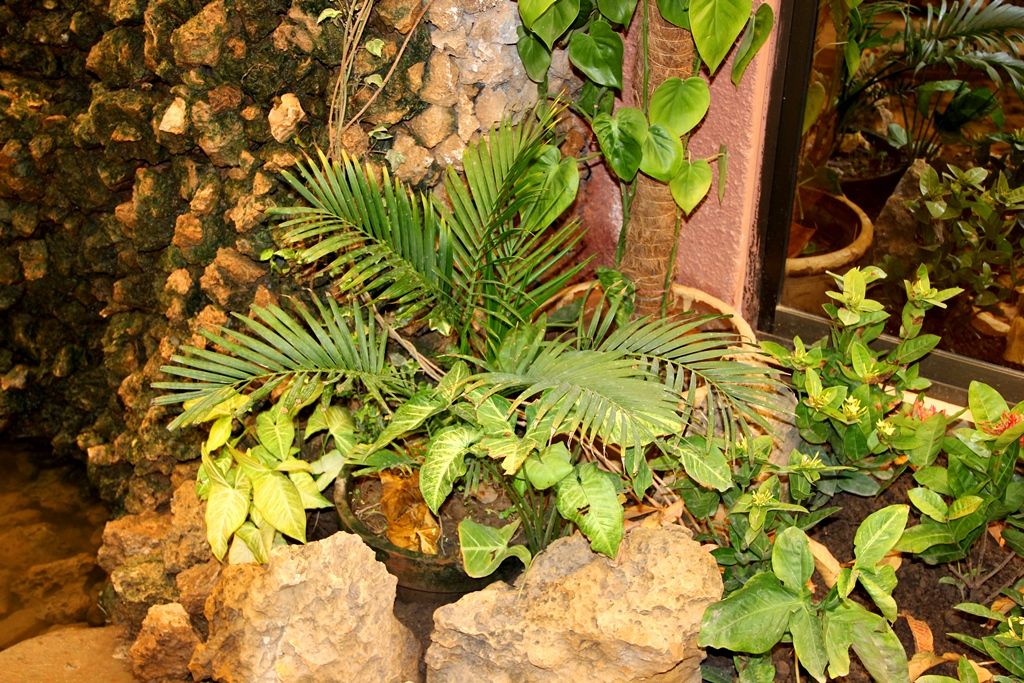
Closeup of the same corner.
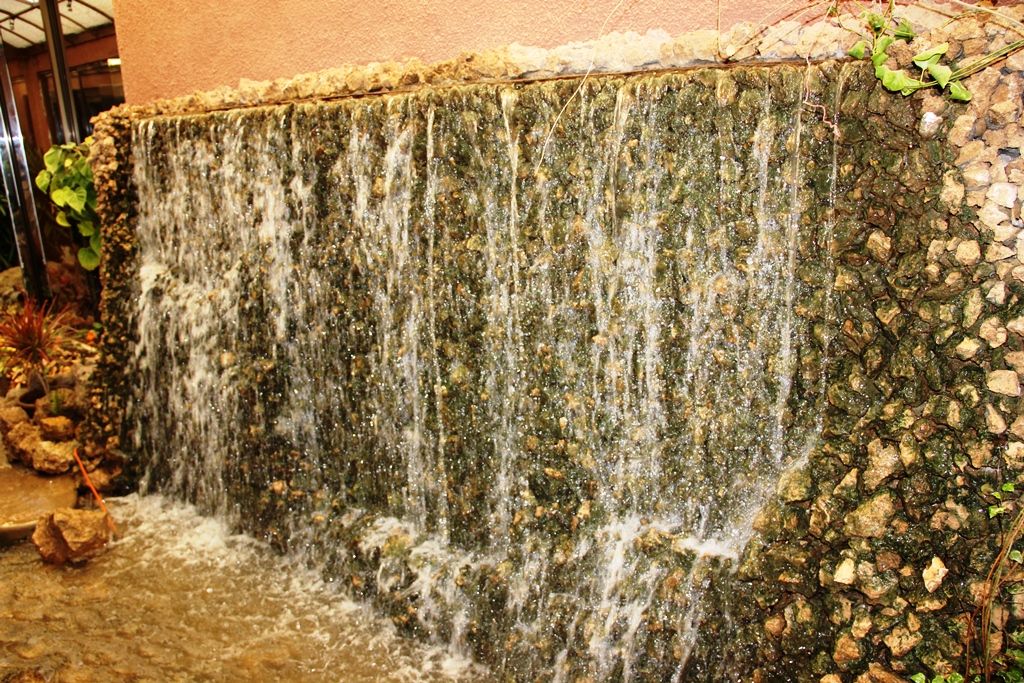
The waterfall. In due time, philodendrons and english ivy will cover this water fall, like the water fall located opposite.
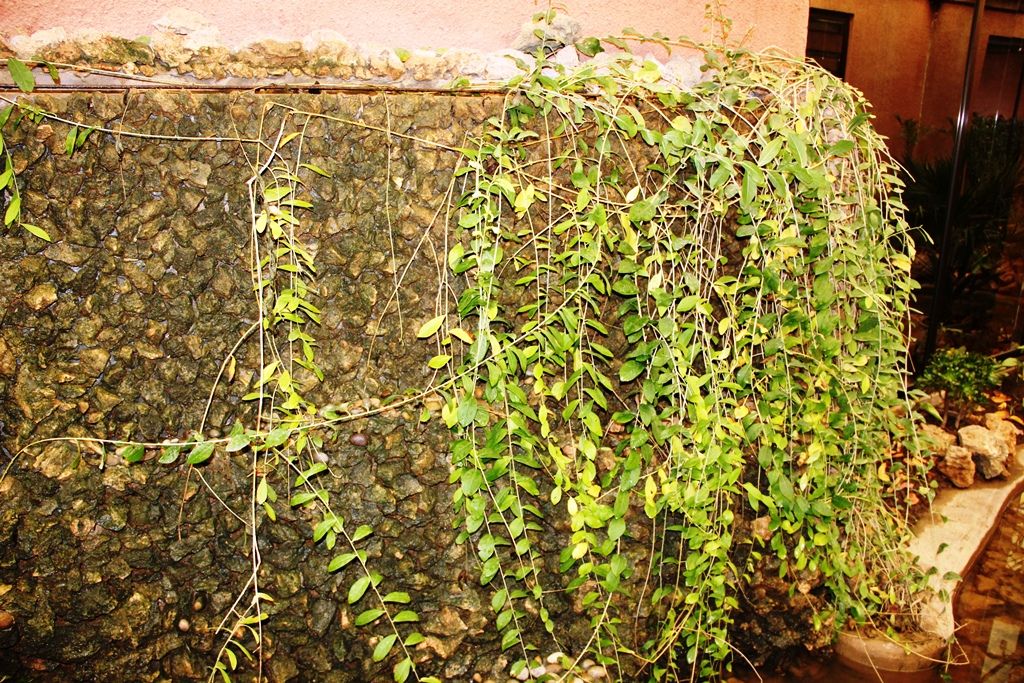
View of the other waterfall. This rangoon creeper is one of the two plants that I retained from previous atrium. It is planted in ground.
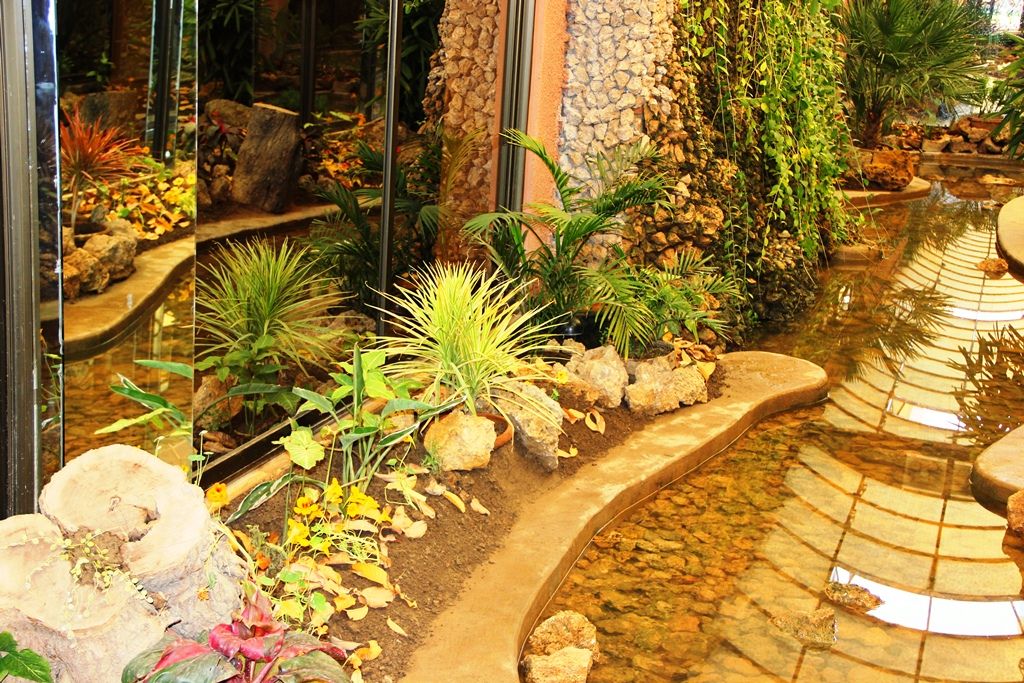
The area opposite to ixoras and wooden log. Mass planted with syngoniums, a couple of Dracaenas and lone Sterlitzia in the centre. The corner near the waterfall has been mass planted with cat palms which during course of time, will have their long leaves falling close to water way. What a sight it would be.... and look at the reflection in he mirror. It took me quite sometime in arranging the plants in a manner that their reflection is always visible from most angles.
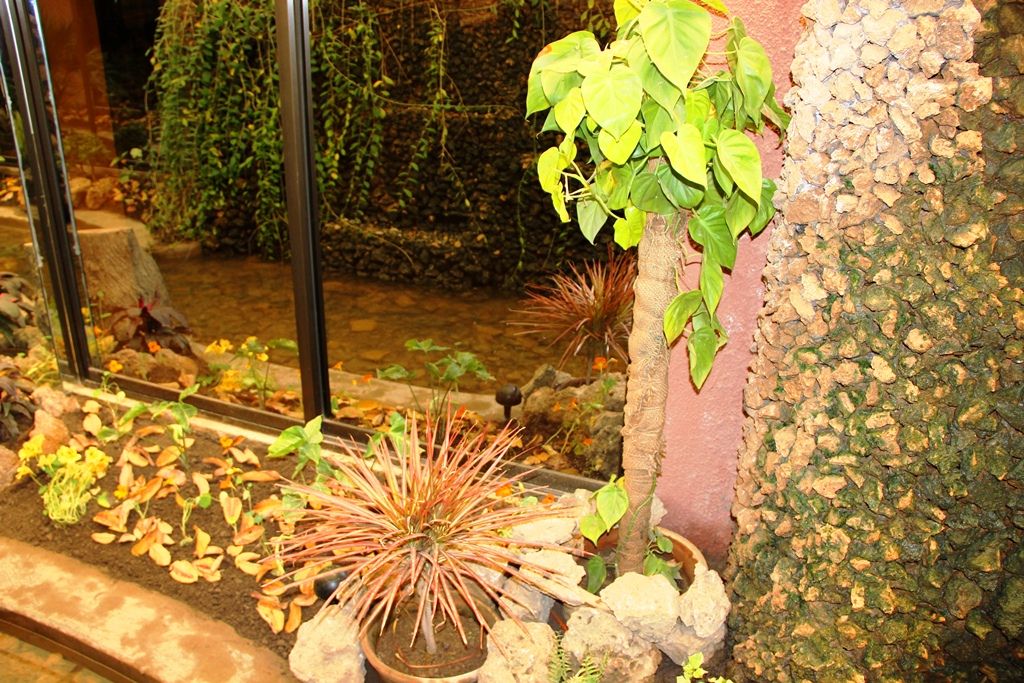
This area ahead of first waterfall looks thin at the moment but has been mass planted with syngoniums and blechnum ferns. It should look lush green in a few months. And look at the dead leaves.... and the reflection of the opposite rockery.
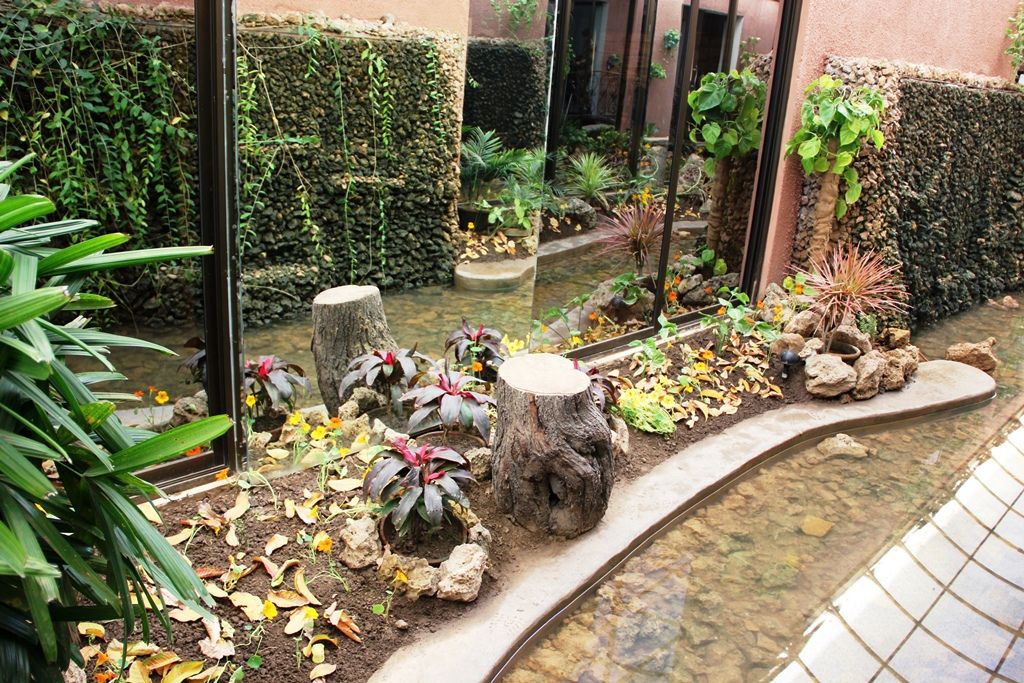
View of the atrium from the other corner. This area has again been mass planted with ferns and syngonium basically, with a few dracaenas in the centre along with a wooden stem. I am hoping that in two months this area will be lush green.
I know this is a big place which many of you might not have and I also had the advantage that masonry work was already done. But a similar idea (not including water falls etc) can always be implemented at a small scale in an isolate corner or may be a balcony or veranda in our houses. When there is a will, there is a way....
What I like about this arrangement is that 80% of the plants used in this arrangement are cheapest avaialbe plants which most of us would not even like to buy (this includes me also ). But I have always believed that gardening and landscaping is not about buying most expensive / rare plants. In fact, it might be the opposite in certain cases. I have seen places where a single cycad will cost equal to or more than the whole arrangement in this atrium but the overall look of that area with expensive plants might not come anywhere close to the effect of this arrangement with cheap arrangement. IMHO therefore, it is all about arranging the plants in a manner that it looks more natural and using healthy / robust plants which do not need much of maintenance. If an arrangement needs lot of maintenance, it is bound to fail in most cases as we will never have enough time to maintain it. It's all about creativity and I believe most of the gardners / plant lovers are inherently creative. Am I wrong???
Thanks for your time...
The atrium as seen at night. An effort has been made that the area should not be over lit and spot lights should just provide enough light to illuminate the intended plants, not all the plants. The plants used are very common ferns (only one expensive fern), cheap palms, syngoniums, dracaenas, Ixoras and few crotons. Some of the plants from the house were also used, mostly palms / Philodendron. Most plants are of small size (big plants are expensive) and it will take 2-3 months for this atrium to give a lush green look. I will eagerly wait to see that....
Another angle. Please note the effect created through reflection of the plants as well as the waterfall on the other side through the mirror. This is what I meant by multiplying the effect. And look at the majestic looking Rhapis palm in the back ground.
The other corner. Being close to water fall, it is basically a fernery. The lone Chamaerops humilis is the specimen plant in this area. It has been kept in the pot otherwise it will keep growing bigger and make a big size clump. Also the soil in this area will be watered well due to ferns which is not needed for Chemaerops. It is watered after 7-15 days. Look at the reflection...
The only expensive fern used is in the centre. Rest all are the cheapest available Blechnum and Nephrolepis ferns of few types. A Nephrolepis exaltata (Boston Fern) has been planted in the wooden log. In time, it's frond will hang down and give a fascinating look. Variegated Nephrolepis have been planted near water and after a while, their leaves will be falling in water. The errect nephrolepis have been planted in the rare. In due time, the will form a stunning back ground and with their runners running through the moist soil, will multiply in great numbers, filling the complete area with lush green ferns.
A spare wooden log was used to make a bench and placed in the atrium. Few Dracaena Maharaja with a Sterlitzia in the back ground (hope it flowers).The area between the log and the water fall has been mainly covered with dwarf ixoras which will provide colour most of the year. Nasturtiums have been planted in abundance to fill the gaps. The steps infront of the wooden bench are natural rocks. Previously, the landscaper had covered all soil with white chips and thought that it looked great. It was the first thing I threw out. I wanted the rockery to look natural.
Fallen leaves from the backyard have been collected and used as mulch. The orange colour of guava leaves has enhanced the looks plus in the long run, they will recycle and improve soil texture. Mali has been strictly instructed not to remove the dead / fallen leaves from the atrium. Nothing goes out and everything will be recycled, unless there are fungus infected leaves / branches. Minimum of chemical fertilizers will be used in this plantation.
Same area from a different angle. Near the water fall where the area is likely to stay damp, philodendron and chamaedorea cataractarum (cat palm) with syngoniums planted in the ground. In time, syngoniums will cover the pots visible in the pic. A lone english ivy is has been planted just next to water fall. And look at the reflections. Even the wooden bridge connecting the two parts of the house through atrium (not commonly used) is giving a great look.
Closeup of the same corner.
The waterfall. In due time, philodendrons and english ivy will cover this water fall, like the water fall located opposite.
View of the other waterfall. This rangoon creeper is one of the two plants that I retained from previous atrium. It is planted in ground.
The area opposite to ixoras and wooden log. Mass planted with syngoniums, a couple of Dracaenas and lone Sterlitzia in the centre. The corner near the waterfall has been mass planted with cat palms which during course of time, will have their long leaves falling close to water way. What a sight it would be.... and look at the reflection in he mirror. It took me quite sometime in arranging the plants in a manner that their reflection is always visible from most angles.
This area ahead of first waterfall looks thin at the moment but has been mass planted with syngoniums and blechnum ferns. It should look lush green in a few months. And look at the dead leaves.... and the reflection of the opposite rockery.
View of the atrium from the other corner. This area has again been mass planted with ferns and syngonium basically, with a few dracaenas in the centre along with a wooden stem. I am hoping that in two months this area will be lush green.
I know this is a big place which many of you might not have and I also had the advantage that masonry work was already done. But a similar idea (not including water falls etc) can always be implemented at a small scale in an isolate corner or may be a balcony or veranda in our houses. When there is a will, there is a way....
What I like about this arrangement is that 80% of the plants used in this arrangement are cheapest avaialbe plants which most of us would not even like to buy (this includes me also
). But I have always believed that gardening and landscaping is not about buying most expensive / rare plants. In fact, it might be the opposite in certain cases. I have seen places where a single cycad will cost equal to or more than the whole arrangement in this atrium but the overall look of that area with expensive plants might not come anywhere close to the effect of this arrangement with cheap arrangement. IMHO therefore, it is all about arranging the plants in a manner that it looks more natural and using healthy / robust plants which do not need much of maintenance. If an arrangement needs lot of maintenance, it is bound to fail in most cases as we will never have enough time to maintain it. It's all about creativity and I believe most of the gardners / plant lovers are inherently creative. Am I wrong??? Thanks for your time...
-
Farhan Ahmed
- Moderator

- Posts: 3791
- Joined: February 5th, 2012, 9:38 pm
- Country: Pakistan
- City: Risalpur/Karachi
- Gardening Interests: Annuals,Herbaceous Perennials, Landscaping,Cottage Garden
- Location: Risalpur,KPK
Re: Atrium Landscaping....
WOW WOW
Amazing, Landscaping at its best.
Job extremely welldone. No words
Amazing, Landscaping at its best.
Job extremely welldone. No words
-
Muhammad Arif Khan
- Donor
- Posts: 4314
- Joined: April 14th, 2011, 1:01 pm
Re: Atrium Landscaping....
Fantastic, remarkable, how do you keep the water cleen (free of Algae).
-
KBW
- Donor
- Posts: 773
- Joined: February 20th, 2013, 2:07 pm
- Country: Pakistan
- City: Islamabad
- Gardening Interests: Roses, Plants in natural habitat, native plants, landscaping
- Location: Zone 2
Re: Atrium Landscaping....
Farhan bhai, thanks a lot Sir.
Arif sb, Sir thanks for your kind words.
Some algae will be there and should be accepted as part of the landscape. This is how it will be in nature also. I am hoping that in four to five months, this atrium will develop it's own sort of micro ecosystem and within that overall setting, Algae will have it's own role to play. There will be insects too, both crawling and flying type and we don’t intend making any extraordinary effort to remove them, unless they get out of proportion or become dangerous. But I do not foresee algae getting out of proportion to an extent that we have to take special measures to remove it. The atrium was filled with clean water and mali has been trained to water the plants in a manner that excessive water does not mix up with the waterfall water. The waterfall is operated for 10 minutes everyday and the circulation of water will keep ensuring that it remains clean, oxygenated and free of bad smell. A few Koi have already been introduced in the water and they feel happy as they have lot of area to play around. I also wanted to introduce a few pairs of finches in the atrium but there are doors which open quite often. All guests in my friend’s house are being attracted by the atrium as they can see it through windows of many rooms and they keep coming in to see the plants.
Arif sb, Sir thanks for your kind words.
Some algae will be there and should be accepted as part of the landscape. This is how it will be in nature also. I am hoping that in four to five months, this atrium will develop it's own sort of micro ecosystem and within that overall setting, Algae will have it's own role to play. There will be insects too, both crawling and flying type and we don’t intend making any extraordinary effort to remove them, unless they get out of proportion or become dangerous. But I do not foresee algae getting out of proportion to an extent that we have to take special measures to remove it. The atrium was filled with clean water and mali has been trained to water the plants in a manner that excessive water does not mix up with the waterfall water. The waterfall is operated for 10 minutes everyday and the circulation of water will keep ensuring that it remains clean, oxygenated and free of bad smell. A few Koi have already been introduced in the water and they feel happy as they have lot of area to play around. I also wanted to introduce a few pairs of finches in the atrium but there are doors which open quite often. All guests in my friend’s house are being attracted by the atrium as they can see it through windows of many rooms and they keep coming in to see the plants.
-
KBW
- Donor
- Posts: 773
- Joined: February 20th, 2013, 2:07 pm
- Country: Pakistan
- City: Islamabad
- Gardening Interests: Roses, Plants in natural habitat, native plants, landscaping
- Location: Zone 2
Re: Atrium Landscaping....
One more thing. My friend, at the end, was willing to spend more money and buy some fancy plant species as he felt that these cheap plants will not create the effect desired. I stuck with the most common plants as they are well settled in our environment, are robust hence disease resistant. Over the years, these plants have developed their own mechanisms to fight diseases and neglect. In fact, over the years, they have developed symbiotic relationship with insects and bacteria etc. Plants provide them place to live while they do certain things which protect the plants from dangers / diseases. I have a firm conviction that a healthy lush green Nephrolepis exaltata (fish fern) which only costs 25 Rs will ultimately look far better than a very sophisticated and expensive cultivar of Asplenium nidus (bird’s nest fern). Asplenium will need lot of care which we can not provide and would therefore ultimately get some disease. Fish fern will thrive healthily and in the long run, will enhance the beauty of the area more than the more expensive and elegant looking bird's nest.
-
Munir
- Donor
- Posts: 1086
- Joined: October 23rd, 2012, 1:43 pm
- Country: Pakistan
- City: Islamabad
- Gardening Interests: Ornamental Plants,Vines,Annuals,Herbs,Veggies & Fruit Trees.
New Love: Roses & Lilies - Location: Islamabad
Re: Atrium Landscaping....
KBW,simply splendid & most fascinating--- infact beyond words; equally great is the explanation.
To reduce the role of Mali,why don't you consider installing drip irrigation ? Adding finches is a great idea; reconsider even if it requires having a double door or a separate cage/ partition; with drip irrigation none of these may be required. Godspeed !
To reduce the role of Mali,why don't you consider installing drip irrigation ? Adding finches is a great idea; reconsider even if it requires having a double door or a separate cage/ partition; with drip irrigation none of these may be required. Godspeed !
-
jdashraf
- Senior Member

- Posts: 557
- Joined: February 3rd, 2013, 12:52 pm
- Country: Pakistan
- City: Rawalpindi
- Gardening Interests: Vines, Perennial flowers and plants , fragrant flowers , bulbs
Re: Atrium Landscaping....
Amazing, beautiful, artistic and more importantly, the most economical. Job very well done. Your friend is very lucky to have friends like you, KBW...
Javed Ashraf.
-
Farhan Ahmed
- Moderator
- Posts: 3791
- Joined: February 5th, 2012, 9:38 pm
- Country: Pakistan
- City: Risalpur/Karachi
- Gardening Interests: Annuals,Herbaceous Perennials, Landscaping,Cottage Garden
- Location: Risalpur,KPK
Re: Atrium Landscaping....
Presently the greater impact is of the grand setup.....which must be very costly as you said
-
KBW
- Donor
- Posts: 773
- Joined: February 20th, 2013, 2:07 pm
- Country: Pakistan
- City: Islamabad
- Gardening Interests: Roses, Plants in natural habitat, native plants, landscaping
- Location: Zone 2
Re: Atrium Landscaping....
Muneer sb, Javed sb, thanks for the comments.
Muneer sb, drip irrigation is a good idea. It is more economical in the long run.
Farhan sb, the whole setup can be made quite economically. In my view, water fall is not needed and neither there is a needs to make a complete wall of expensive rock stones. It is difficult to maintain a water fall in a house in the long run. In fact I consider it a short cut taken by most of our landscapers. Actually, they can earn better by doing these fancy things.
In this atrium, water falls were already there. If I had to do this atrium from the scratch, I would have advised my friend not to get a water fall made. It raised the cost of project many times. Believe me a very decent atrium can be made without all these fancy things. One just needs an area which is enclosed so that plants are protected from heat / frost and required humidity level can be maintained, has enough light and air circulation. These are the basic and essential requirements, rest all is a matter of choice but not essential. Once basic requirements are met, from there on it is all imagination / creativity and sky is the limit. You would have seen many atriums in / around our offices and other public bulidings where lot of money is spent on these fancy things but one or more of the basic requirements are overlooked. The result is either a failure or a shabily maintained rockery with inappropriate plantation.
Muneer sb, drip irrigation is a good idea. It is more economical in the long run.
Farhan sb, the whole setup can be made quite economically. In my view, water fall is not needed and neither there is a needs to make a complete wall of expensive rock stones. It is difficult to maintain a water fall in a house in the long run. In fact I consider it a short cut taken by most of our landscapers. Actually, they can earn better by doing these fancy things.
In this atrium, water falls were already there. If I had to do this atrium from the scratch, I would have advised my friend not to get a water fall made. It raised the cost of project many times. Believe me a very decent atrium can be made without all these fancy things. One just needs an area which is enclosed so that plants are protected from heat / frost and required humidity level can be maintained, has enough light and air circulation. These are the basic and essential requirements, rest all is a matter of choice but not essential. Once basic requirements are met, from there on it is all imagination / creativity and sky is the limit.
You would have seen many atriums in / around our offices and other public bulidings where lot of money is spent on these fancy things but one or more of the basic requirements are overlooked. The result is either a failure or a shabily maintained rockery with inappropriate plantation.