Sharing a few pics of the atrium described in above post....
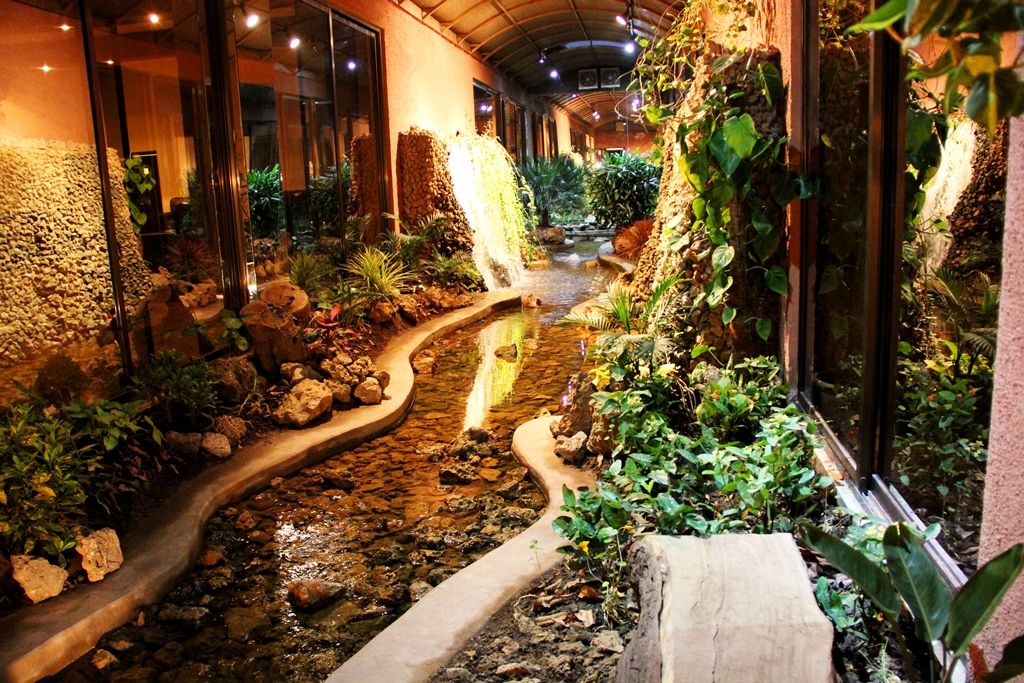
The atrium as seen at night. An effort has been made that the area should not be over lit and spot lights should just provide enough light to illuminate the intended plants, not all the plants. The plants used are very common ferns (only one expensive fern), cheap palms, syngoniums, dracaenas, Ixoras and few crotons. Some of the plants from the house were also used, mostly palms / Philodendron.
Most plants are of small size (big plants are expensive) and it will take 2-3 months for this atrium to give a lush green look. I will eagerly wait to see that.... 
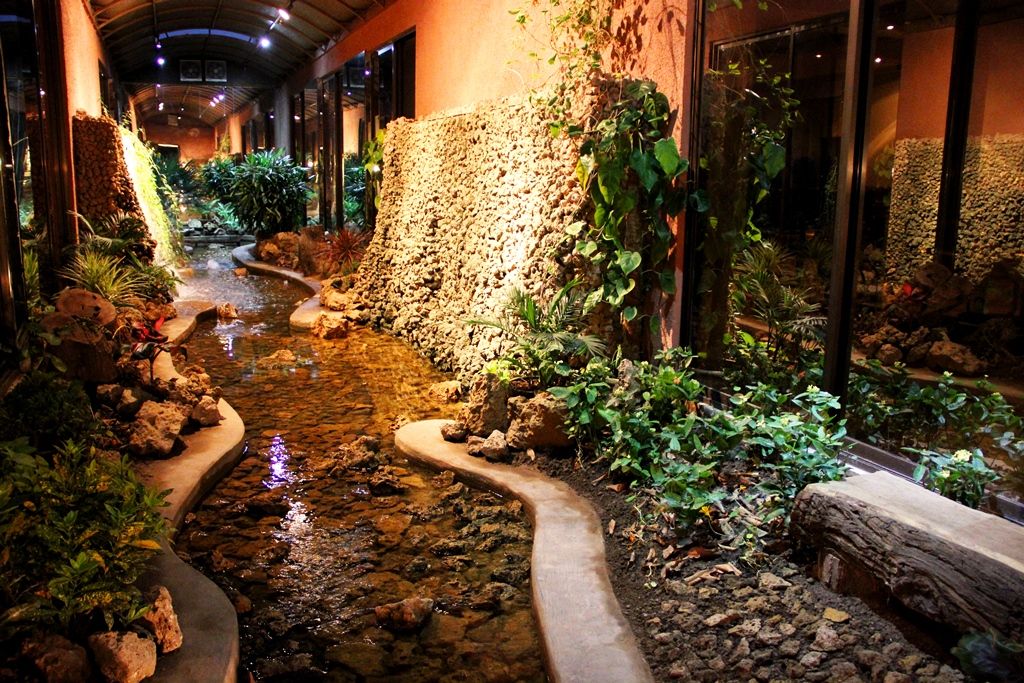
Another angle. Please note the effect created through reflection of the plants as well as the waterfall on the other side through the mirror. This is what I meant by multiplying the effect. And look at the majestic looking Rhapis palm in the back ground.
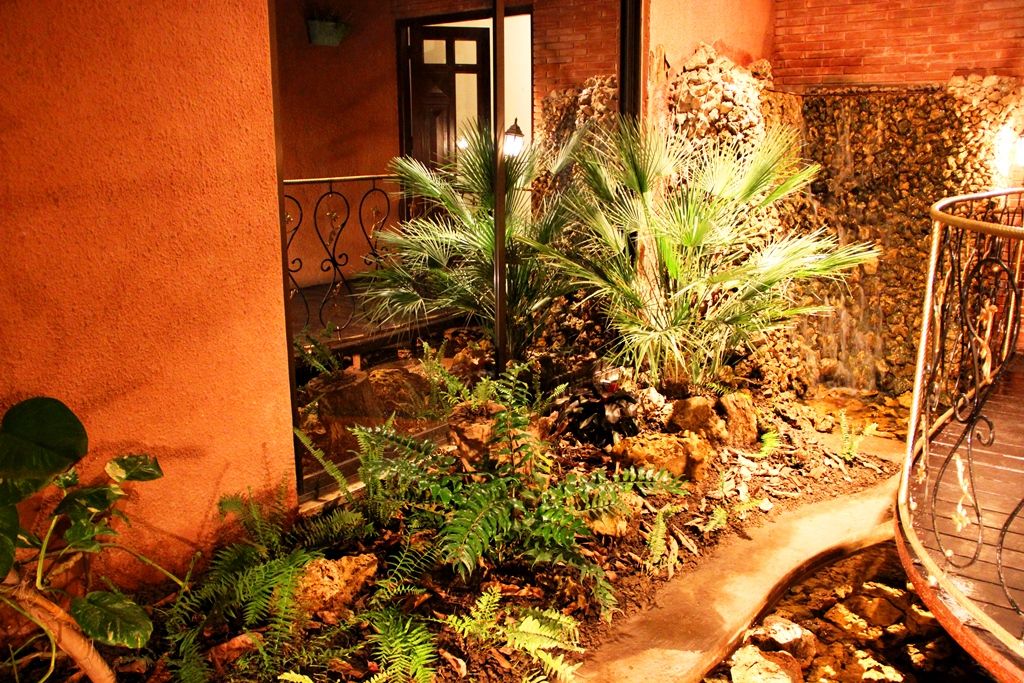
The other corner. Being close to water fall, it is basically a fernery. The lone Chamaerops humilis is the specimen plant in this area. It has been kept in the pot otherwise it will keep growing bigger and make a big size clump. Also the soil in this area will be watered well due to ferns which is not needed for Chemaerops. It is watered after 7-15 days. Look at the reflection...
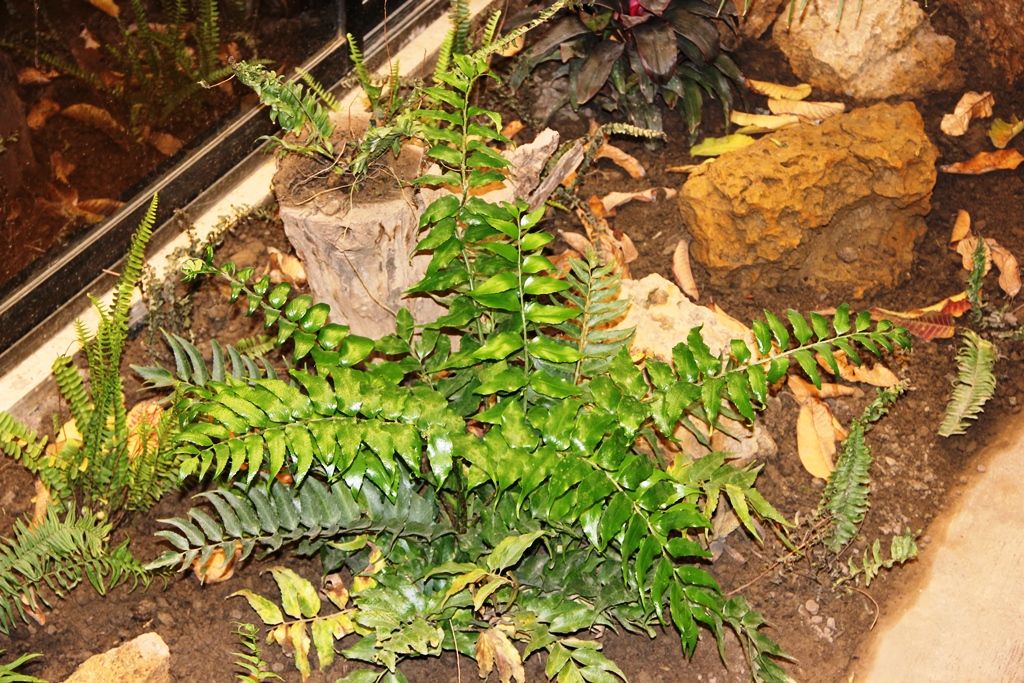
The only expensive fern used is in the centre. Rest all are the cheapest available Blechnum and Nephrolepis ferns of few types. A Nephrolepis exaltata (Boston Fern) has been planted in the wooden log. In time, it's frond will hang down and give a fascinating look. Variegated Nephrolepis have been planted near water and after a while, their leaves will be falling in water. The errect nephrolepis have been planted in the rare. In due time, the will form a stunning back ground and with their runners running through the moist soil, will multiply in great numbers, filling the complete area with lush green ferns.
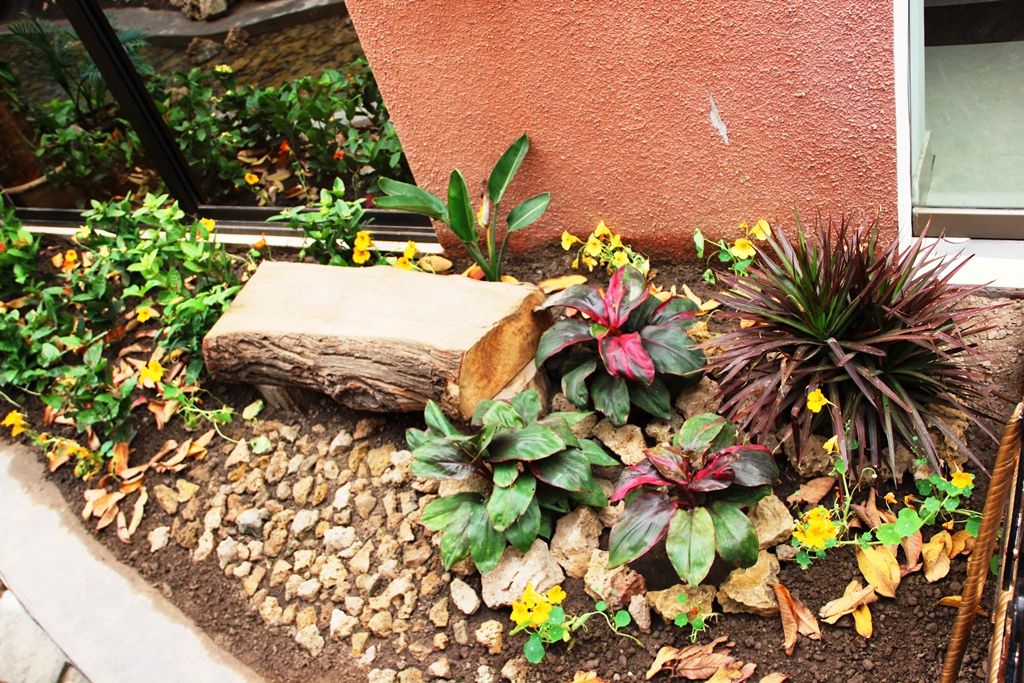
A spare wooden log was used to make a bench and placed in the atrium. Few Dracaena Maharaja with a Sterlitzia in the back ground (hope it flowers).The area between the log and the water fall has been mainly covered with dwarf ixoras which will provide colour most of the year. Nasturtiums have been planted in abundance to fill the gaps. The steps infront of the wooden bench are natural rocks. Previously, the landscaper had covered all soil with white chips and thought that it looked great. It was the first thing I threw out. I wanted the rockery to look natural.

Fallen leaves from the backyard have been collected and used as mulch. The orange colour of guava leaves has enhanced the looks plus in the long run, they will recycle and improve soil texture. Mali has been strictly instructed not to remove the dead / fallen leaves from the atrium. Nothing goes out and everything will be recycled, unless there are fungus infected leaves / branches. Minimum of chemical fertilizers will be used in this plantation.
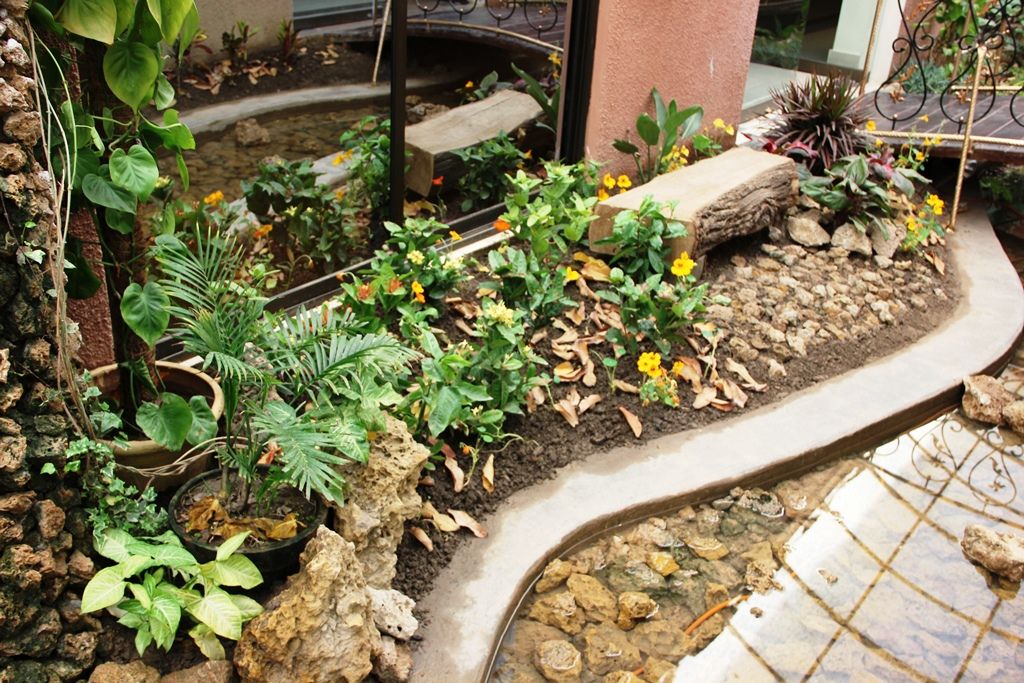
Same area from a different angle. Near the water fall where the area is likely to stay damp, philodendron and chamaedorea cataractarum (cat palm) with syngoniums planted in the ground. In time, syngoniums will cover the pots visible in the pic. A lone english ivy is has been planted just next to water fall. And look at the reflections. Even the wooden bridge connecting the two parts of the house through atrium (not commonly used) is giving a great look.
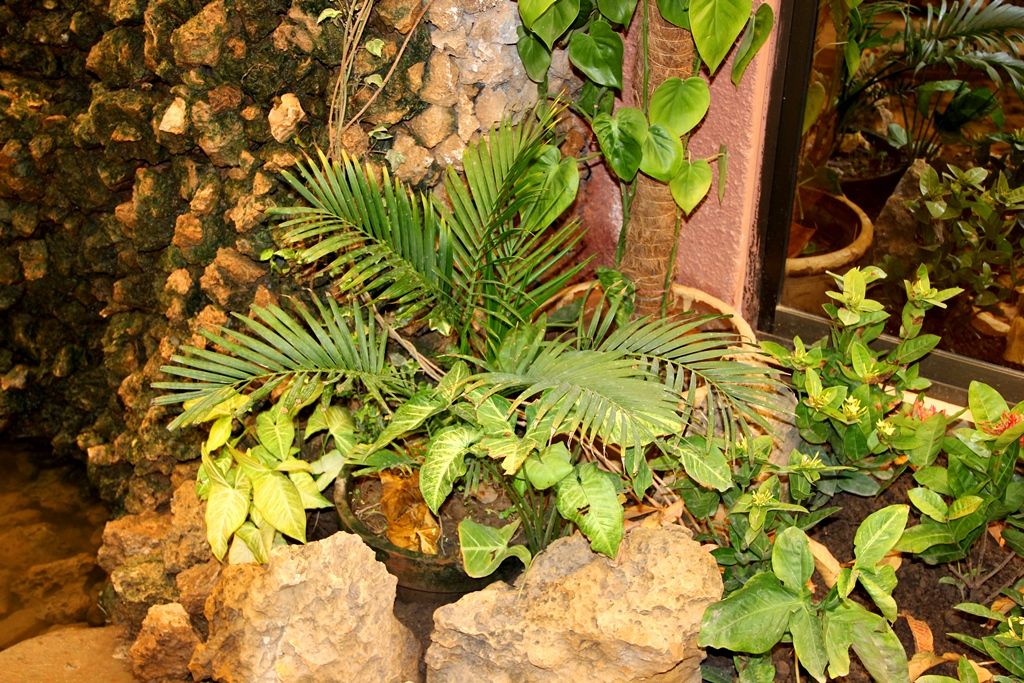
Closeup of the same corner.
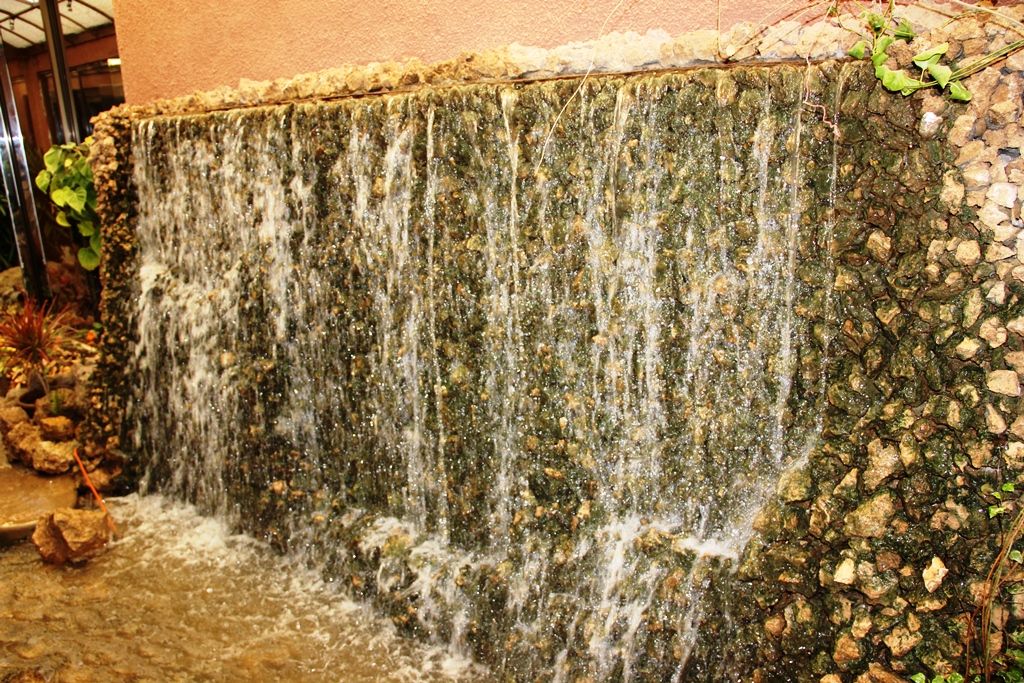
The waterfall. In due time, philodendrons and english ivy will cover this water fall, like the water fall located opposite.
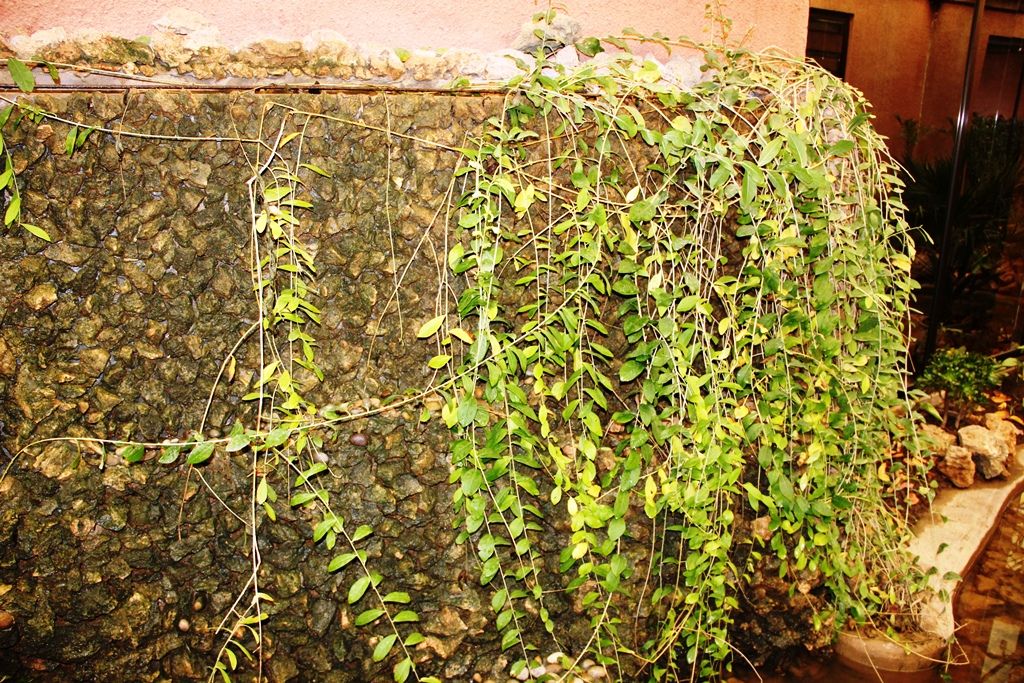
View of the other waterfall. This rangoon creeper is one of the two plants that I retained from previous atrium. It is planted in ground.
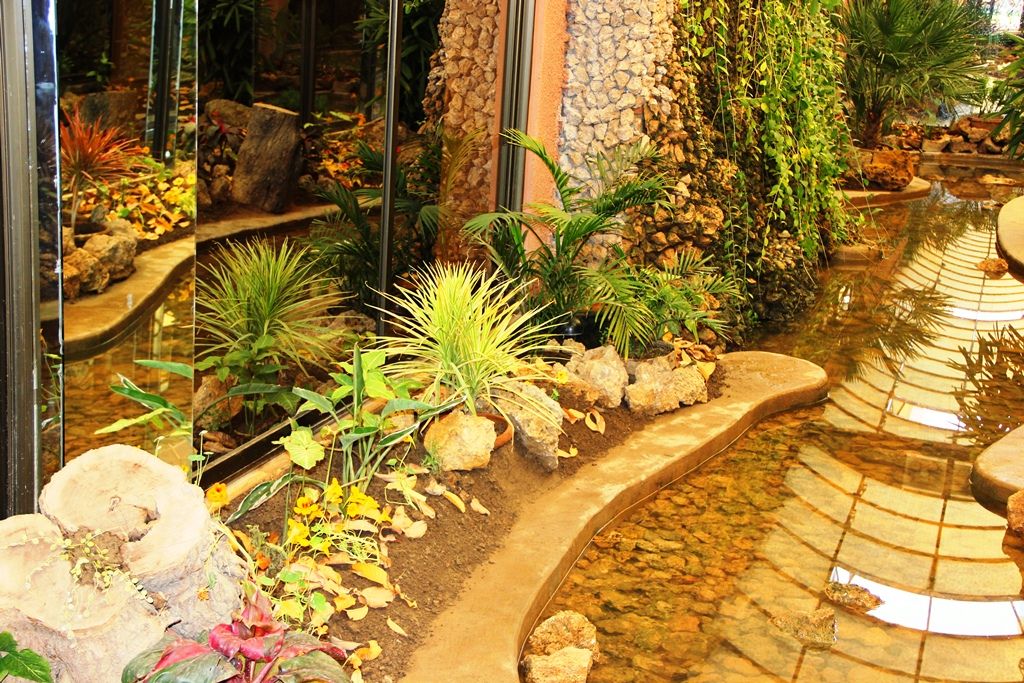
The area opposite to ixoras and wooden log. Mass planted with syngoniums, a couple of Dracaenas and lone Sterlitzia in the centre. The corner near the waterfall has been mass planted with cat palms which during course of time, will have their long leaves falling close to water way. What a sight it would be.... and look at the reflection in he mirror. It took me quite sometime in arranging the plants in a manner that their reflection is always visible from most angles.
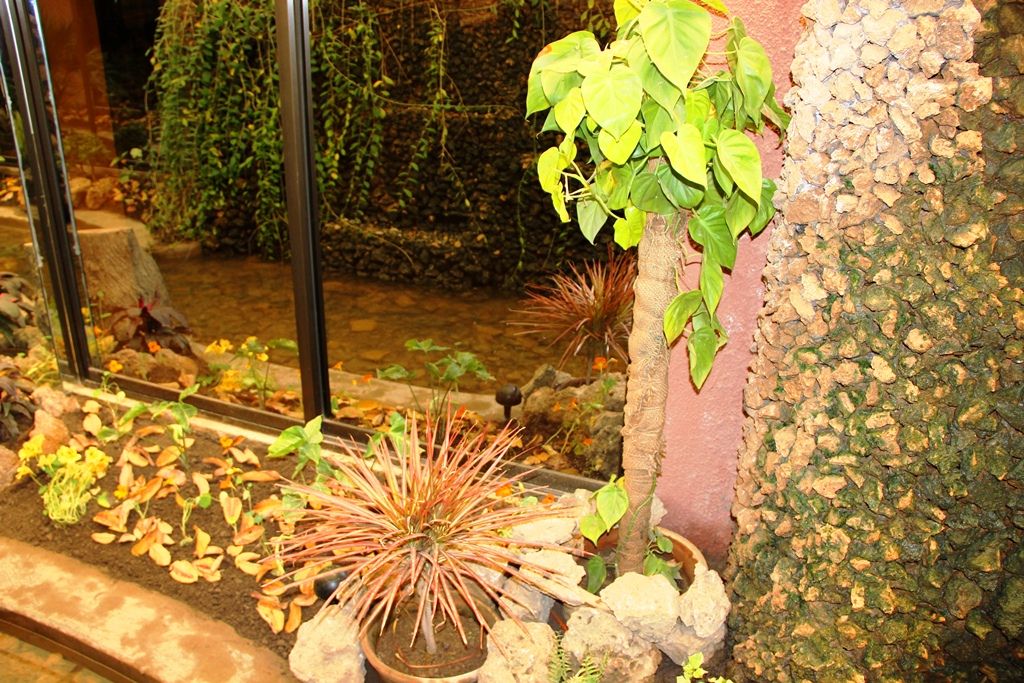
This area ahead of first waterfall looks thin at the moment but has been mass planted with syngoniums and blechnum ferns. It should look lush green in a few months. And look at the dead leaves.... and the reflection of the opposite rockery.
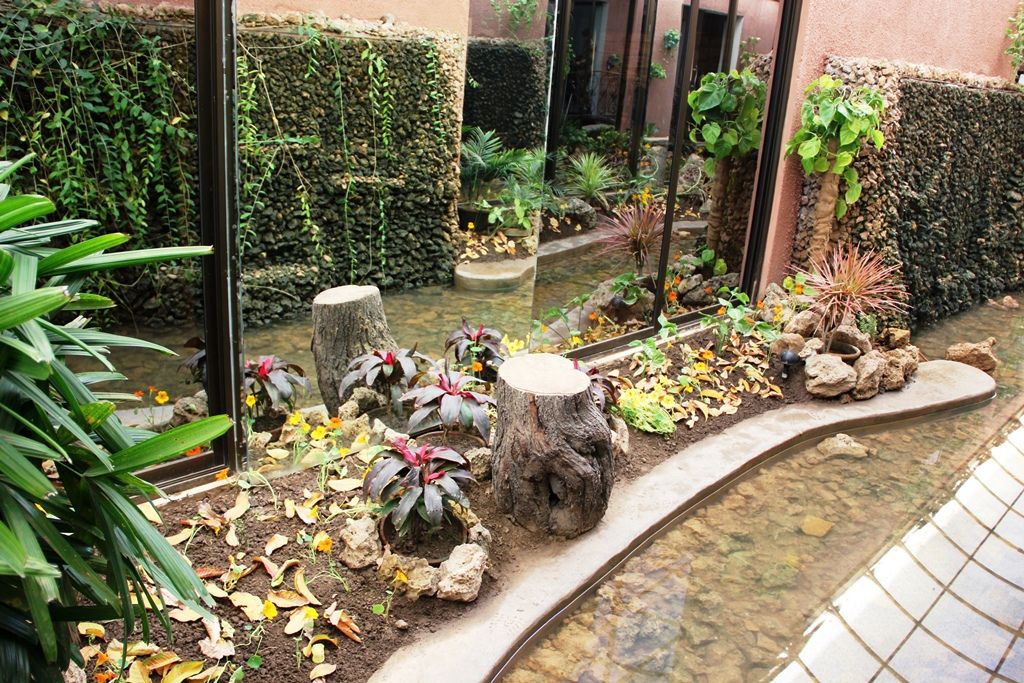
View of the atrium from the other corner. This area has again been mass planted with ferns and syngonium basically, with a few dracaenas in the centre along with a wooden stem. I am hoping that in two months this area will be lush green.
I know this is a big place which many of you might not have and I also had the advantage that masonry work was already done. But a similar idea (not including water falls etc) can always be implemented at a small scale in an isolate corner or may be a balcony or veranda in our houses.
When there is a will, there is a way....
What I like about this arrangement is that 80% of the plants used in this arrangement are cheapest avaialbe plants which most of us would not even like to buy (this includes me also

). But I have always believed that gardening and landscaping is not about buying most expensive / rare plants. In fact, it might be the opposite in certain cases. I have seen places where a single cycad will cost equal to or more than the whole arrangement in this atrium but the overall look of that area with expensive plants might not come anywhere close to the effect of this arrangement with cheap arrangement.
IMHO therefore, it is all about arranging the plants in a manner that it looks more natural and using healthy / robust plants which do not need much of maintenance. If an arrangement needs lot of maintenance, it is bound to fail in most cases as we will never have enough time to maintain it. It's all about creativity and I believe most of the gardners / plant lovers are inherently creative. Am I wrong???
Thanks for your time...
